


Research
The Consumer Price Index, Housing Costs, Consumer Credit, and the Cost of Living
This study by the Taub Center addresses the perception that the consumer price index (CPI) does not reflect the actual cost of living as experienced by households in Israel. The study’s authors, Prof. Benjamin Bental and Dr. Labib...
Read More »Generative Artificial Intelligence and Foundational Skills of Israeli Workers
This Taub Center study shows that, contrary to gloomy predictions that artificial intelligence will render reading, mathematics, and reasoning skills obsolete, demand for workers with strong foundational skills is only expected to grow. Researchers Michael Debowy, Prof. Gil...
Read More »How many votes will a political party need to pass the electoral threshold in the coming election?
The Taub Center has published a special paper ahead of the upcoming elections, pointing to a sharp rise in the threshold for entering the Knesset, driven primarily by the growth in the voting-age population since the 2022 elections....
Read More »Reserve Duty in Israel 2026: A Status Report
The Taub Center is publishing a short booklet presenting data showing that the extensive reserve duty performed since October 7 is expected to adversely affect the wages, employment, and higher education of reservists, and their families. The publication describes the characteristics of the reservist population and shows that reservists may find themselves at a relative disadvantage in the coming years. The study’s editors—Ori Oberman and Michael Debowy, who are themselves serving in the reserves, and Dr. Sarit Silverman, whose husband is a reservist—are publishing these data out of a sense of both personal and professional commitment, with the aim of raising awareness of the long-term consequences of prolonged reserve duty for reservists and their families.
Read More »Emergency Department Visits, Hospitalizations, and Mortality: The Effects of Heat Stress in Israel, 2010–2023
This Taub Center study examines the relationship between heat stress and emergency room visits, hospitalizations, and mortality in Israel from 2010 to 2023. The researchers — Or Siman-Tov, Prof. Alex Weinreb, Irina Rogozovsky, and Dr. Maya Sadeh —...
Read More »A Picture of the Nation 2026: Israel’s Society and Economy in Figures
The Taub Center is publishing this year’s A Picture of the Nation 2026, which presents updated data on the state of Israeli society. The booklet includes selected findings from studies conducted at the Center over the past year,...
Read More »Appeal committees for social services in the Ministry of Welfare
This policy paper is only available in Hebrew. The Appeals Committee system for social services in the Ministry of Welfare and Social Security is intended to ensure the right of social service recipients to appeal decisions made in...
Read More »The scope of conversion in Israel: a demographic perspective
This study is currently available only in Hebrew. For most of Jewish history, conversion was seen as having limited demographic impact. Since antiquity, and for more than 1,500 years, the contribution of conversion to the growth of the...
Read More »Public Capital and Economic Growth in Israel
Following the events of October 7, the Israeli economy faces a new security reality, accompanied by a significant increase in defense spending. According to estimates, over the next decade, the defense budget is expected to average about NIS...
Read More »Owning or Renting? The Dynamics of Housing Tenure in Israel
This Taub Center study examines changes in housing patterns among a fixed population over time in 2013–2022, based on the longitudinal survey of the CBS (Central Bureau of Statistics). In their study, Prof. Benjamin Bental and Dr. Labib...
Read More »“Boundary Crossing Teachers”: A Possible Solution to Staffing Gaps in the Education System
This study by the Taub Center for Social Policy Studies in Israel points to a growing phenomenon of “boundary-crossing teachers,” reshaping the composition of Israeli teaching staff. Nachum Blass, Principal Researcher and Chair, Taub Center Education Policy Program,...
Read More »How Artificial Intelligence Changed the Composition of the Unemployed in Israel
This study by the Taub Center for Social Policy Studies in Israel examines how artificial intelligence (AI) is reshaping the composition of the unemployed in Israel. The researchers — Michael Debowy, Prof. Gil S. Epstein, and Prof. Avi...
Read More »The Impact of Technology on Wage Gaps in Israel
The full policy paper is currently available only in Hebrew. As generative artificial intelligence tools continue to develop, their adoption within the Israeli economy is accelerating, accompanied by far-reaching projections regarding their potential impact on employment, productivity, and...
Read More »A Grave Shortage and the Coming Wave of the Dead
Israel’s burial policy is generous and exceptional: it guarantees every citizen a permanent grave near their place of residence, funded by the state. However, this policy is not sustainable. Given the expected surge in the elderly population in...
Read More »Timing of Autism Recognition Among Israeli Children: Community and Socioeconomic Factors
A new study by the Taub Center for Social Policy Studies in Israel, conducted in collaboration with the KI Research Institute, reveals systemic barriers in autism services that are depriving children in disadvantaged communities of critical early intervention....
Read More »On Real and Perceived Crises in the Education System
State of the Nation Report 2025 – Chapter: Education Israel’s education system is facing an unprecedented increase in the number of students enrolled in special education. This reality has led to a situation in which a substantial share...
Read More »Investment and Returns in the Environment and Health: The Water Sector, Energy, and Government Expenditures
Environment and Health Chapter in State of the Nation Report 2025: Expenditure on environmental protection out of all government expenditure has declined over the years, and today stands at only about 1.2% The majority of environmental expenditure is...
Read More »The Israeli Labor Market 2025: From Strategic Dangers to Technological Ones
Labor Market Chapter State of the Nation Report 2025: Taub Center researchers Michael Debowy, Prof. Gil S. Epstein, and Prof. Avi Weiss present an overview of the labor market following more than two years of war, highlighting...
Read More »Welfare and the Shadow of Warfare
Welfare Chapter State of the Nation Report 2025: Taub Center researchers Prof. John Gal, Shavit Ben-Porat, and Yael Ovadia examine the activity of Israel’s welfare and social security systems in 2024, In the welfare chapter published as part...
Read More »Israel 2025: A Demographic Crossroads
Demography chapter, State of the Nation Report 2025: Since the establishment of the State, Israel’s population growth rate has fallen below 1.5% only twice: to 1.42% in 1981 and to 1.35% in 1983. Israel’s growth rate in 2025...
Read More »Is the Israeli Economy Recovering?
State of the Nation Report 2025 – Chapter: Macroeconomic Trends Israel’s economy is at a highly sensitive point. The high costs of the war have increased the government budget deficit, the level of debt relative to GDP, and...
Read More »The Paradox of Israel’s Healthcare System: Between National Achievements and Ongoing Erosion
State of the Nation Report 2025 – Chapter: Health Trends Looking at the state of healthcare in Israel reveals a paradox. On the one hand, life expectancy in Israel is high and continues to rise, placing it among...
Read More »Pisa Predictive Power of Future Educational Attainments: A Longitudinal Study
This study shows that performance on international PISA exams is a strong predictor of later educational success. At the same time, the study finds that many students who scored poorly on PISA nonetheless earned a Bagrut (matriculation) certificate,...
Read More »The Sources of Budget Gaps in the Middle School System
This research is currently available only in Hebrew. This study examines the level of funding allocated by the Ministry of Education to middle schools across different sectors and supervisory streams, and asks whether any group receives preferential treatment....
Read More »The Preschool Special Education Expansion Problem: Numbers, Trends, and Disparities
The Taub Center releases groundbreaking new research on the special education crisis in Israeli preschools from the 2020/21 to 2023/24 school years. The findings reveal a dramatic surge in children receiving special education services, alongside stark disparities across...
Read More »Israel’s National Transfer Account: Income, Expenditures, and Life-Cycle Deficits
According to the definition of the Central Bureau of Statistics, national accounts “comprehensively and in detail describe the economic activity in the economy, the relationships among the country’s economic agents, and the links between the Israeli economy and...
Read More »The fiscal consequences of changing demographic composition: Aging and differential growth across Israel’s three major subpopulations
Among high-income countries, Israel has an unusual demographic profile. While averaging 1.8% growth per year in GDP per capita (constant USD) over the last 25 years, its population has been increasing by 1.9% per year. Most years, around...
Read More »Mid-life and Alone — Single-Person Households: Characteristics, Challenges, and Policy Directions
The full research is currently available only in Hebrew. A first-of-its-kind study in Israel, published by the Taub Center, reveals that there are currently about 144,000 men and women aged 50–64 living in single-person households, many of whom...
Read More »Employment in the High-Tech Sector and Technology Occupations: Present and Future Challenges
Israel’s high-tech industry, the most productive sector in the economy, is entering a challenging period. This study reveals that the war and the artificial intelligence revolution are leaving employment in the sector in worse shape than in the...
Read More »Increasing the Deductible for the Purchase of Medicines and Services Included in the Health Basket: Analysis the Draft Decree on the Subject and Alternative Proposals
This publication is currently available in Hebrew only. Following the government’s decision to raise copayments for medicines, services, and medical technologies included in the national healthcare basket, Taub Center researchers examined the proposal and its expected implications. According...
Read More »Educational Trends in the Jewish Population: Long-Term Patterns by Ethnic Groups
The ethnic divide has been, and remains, one of the most charged topics in Israeli discourse. This Taub Center study examined educational gaps among Israel’s Jewish population from different origin groups — those of Asian/African origin, European/American origin,...
Read More »Beyond Capacity: The Relationship Between Preschool Class Size and Special Education Participation
This policy paper by the Taub Center shows that overcrowding in general preschools leads parents of children with special needs to enroll them in separate special education frameworks — a phenomenon that occurs mainly in Hebrew State education...
Read More »Tipat Halav (Family Health Center) in Israel: Where Is It Headed?
The full policy paper is currently available only in Hebrew. This policy paper presents a troubling picture of Tipat Halav services in Israel — the main public institution for child health in early childhood. The clinics suffer from...
Read More »The Sources of Budget Gaps in the Official Primary Education System
A new study by the Taub Center for Social Policy Studies in Israel examines the reasons behind the gaps in class and per-student budgets in the Official primary education system — specifically between secular Hebrew State education, State-religious...
Read More »Between Environment and Demography: The Waste Crisis and the Loss of Open Spaces
This chapter in the State of the Nation Report focuses on two major environmental issues: the waste crisis and tree felling for construction and development purposes. Taub Center researchers, Dr. Maya Sadeh and Or Siman-Tov, present alarming data...
Read More »Young Children and Their Parents During the War
Events of October 7, 2023, and the ensuing war have deeply impacted young children and their parents. A survey conducted by the Taub Center Initiative on Early Childhood Development and Inequality paints a concerning picture, highlighting, among other...
Read More »Demography Overview, 2024: Diverging Fertility, Shifting Migration, and Shrinking Yishuvim
The events of the past two years have had a significant impact on Israel’s demography — affecting, among other things, fertility rates, which initially declined at the start of the war but surged again after a few months;...
Read More »The Education System in Israel 2020–2024: A Conservative System in a Dynamic Reality
This chapter examines the state of the education system in Israel in light of recent events — the plan for judicial reform, the current war, and, to a great extent, the Covid-19 pandemic. The head of the Taub...
Read More »The Healthcare System in Israel, 2024
The healthcare chapter of the State of the Nation Report 2024 presents trends in national health expenditure and highlights several challenges facing the healthcare system, among them, the workforce crisis, a shortage of hospital beds and medical equipment,...
Read More »The Labor Market in Israel in 2024 in the Shadow of War
This chapter of the State of the Nation Report 2024 reviews the status of the labor market after more than a year of war. Taub Center researchers Michael Debowy, Prof. Gil S. Epstein, and Prof. Avi Weiss present...
Read More »The Welfare System and the Challenges of War
This chapter examines the activities of Israel’s welfare and social security systems over the past year, in the shadow of the October 7, 2023 massacre and the ensuing war. Prof. John Gal and Shavit Ben-Porat review changes in...
Read More »Israel’s Economy 2024: A Nation at War
The Taub Center is proud to present the State of the Nation Report 2024. The chapters of the report will be released gradually over the coming month. The chapter being presented now, the first of eight chapters, focuses...
Read More »Competition Among Health Funds: Three Decades of the National Health Insurance Law
The full publication is currently available only in Hebrew. To mark 30 years since the enactment of the National Health Insurance Law, the Taub Center is releasing a study reviewing the development of the law over the past...
Read More »Working When Sick: Presenteeism in Israel
The Taub Center publishes a study that, for the first time, examines “presenteeism” — people coming to their place of work while sick — in the Israeli labor market. The study highlights the prevalence of the phenomenon, the...
Read More »The Health And Economic Burden of Desalination-Related Magnesium Deficiency
This research was generously supported by Yad Hanadiv The prolonged water crisis that Israel suffered from for decades has been curbed thanks to desalination plants, but a side effect of that solution has created an unexpected health problem...
Read More »Impact
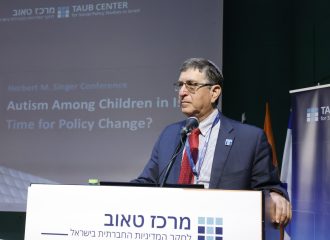 Herbert M. Singer Annual Conference: Autism in Israel: Time for Policy Change?
08.09.2026
Herbert M. Singer Annual Conference: Autism in Israel: Time for Policy Change?
08.09.2026
For the conference page, click here
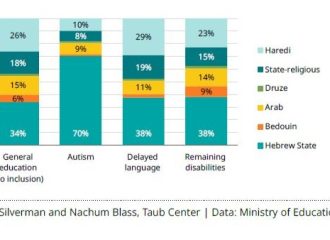 Meeting with the Early Childhood Division, Ministry of Education
21.07.2026
Meeting with the Early Childhood Division, Ministry of Education
21.07.2026
Following the Taub Center’s outreach to government ministries upon the...
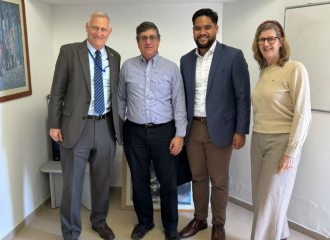 Prof. Avi Weiss presented the State of the Nation Report 2025 to the staff of the U.S. Embassy in Israel
24.02.2026
Prof. Avi Weiss presented the State of the Nation Report 2025 to the staff of the U.S. Embassy in Israel
24.02.2026
Prof. Avi Weiss, President of the Taub Center, met with...
 Impact of the research on the heightened use of strong narcotic pain medications in Israel
01.08.2023
Impact of the research on the heightened use of strong narcotic pain medications in Israel
01.08.2023
In March 2023, the Taub Center published a new study,...
Our Videos
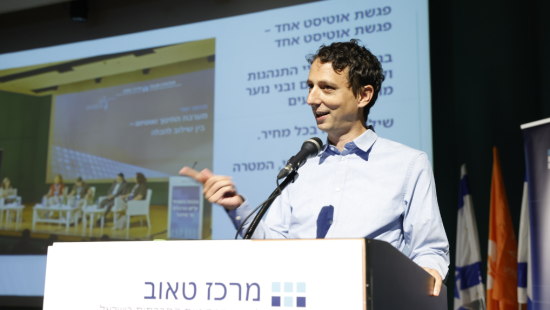 Annual Conference 2026: Autism Among Children in Israel: Time for Policy Change?
07.09.2026
Annual Conference 2026: Autism Among Children in Israel: Time for Policy Change?
07.09.2026
Herbert M. Singer Conference Autism Among Children in Israel: Time for Policy Change?
 2026 State Budget and the toll of the war on Israel – Taub Center Webinar
29.03.2026
2026 State Budget and the toll of the war on Israel – Taub Center Webinar
29.03.2026
Prof. Avi Weiss, President of the Taub Center and Nir Kaidar, Director General speak about Israel’s state budget...
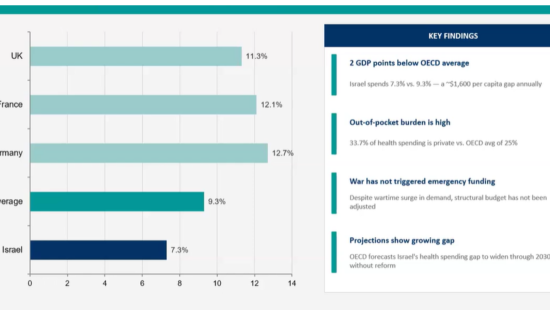 Current health situation in Israel
23.03.2026
Current health situation in Israel
23.03.2026
Current health situation in Israel – Prof. Nadav Davidovich & Geopolitical landscape-Miri Eisin
 Current health situation in Israel – Prof. Nadav Davidovich & Geopolitical landscape-Miri Eisin
22.03.2026
Current health situation in Israel – Prof. Nadav Davidovich & Geopolitical landscape-Miri Eisin
22.03.2026
Current health situation in Israel – Prof. Nadav Davidovich & Geopolitical landscape-Miri Eisin